
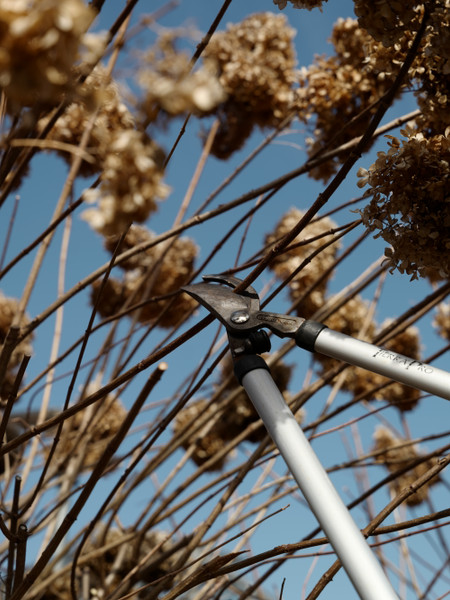
Pruning Hydrangeas and Shrubs
Posted by Jessie Jacobson on Apr 5th 2026
Pruning Hydrangeas and Shrubs
If you are itching to get in the garden but know it’s a bit too early, pruning a select variety of shrubs is a project you can tackle right now!
Pruning is important to overall plants' health, appearance, and maintenance of their natural shape. Pruning promotes fresh growth, and encourages flowering & fruit development. Regular pruning also creates good air flow, which greatly reduces the risk of disease and decline.
Pruning shrubs can be a bit overwhelming at first, but with a little basic knowledge, you’ll be on your way! Check out our video guide here!
When to Prune
New-Wood Bloomers
Prune shrubs that bloom on new wood (meaning buds are formed on new growth during the current growing season) in late winter or early spring. In our area, this is late March or early April. You may also prune this type of shrub in the fall, but most gardeners like to leave dried blooms for winter interest. New-Wood candidates for pruning include, but are not limited to:
- Panicle Hydrangeas (Limelight, Little Lime, Quick Fire, Little Quick Fire, Bobo, Vanilla Strawberry and Diamond Rouge)
- It’s important to prune panicle types before they begin growing leaves, and it's best to wait until severe cold has past - as this can cause winter damage to the branch tips.
- Hydrangea arboresces (Annabelle, Incrediball)
- Japanese Spirea
- Roses
- Japanese Barberry
- Summersweet
- Smokebush
- Cotoneaster
Old-Wood Bloomers
Prune shrubs that bloom on old wood (meaning buds are formed the previous year and are ready to pop this growing season) in late spring, summer, or fall. In general, prune these shrubs after they bloom and their flowers fade. Think Spring bloomers! Old-Wood candidates for pruning include, but are not limited to:
- Macrophylla Hydrangeas (Endless Summer Series of Bloomstruck, Summer Crush, the original blue, Blushing Bride and Twist-and-Shout) blooms on both old and new growth.
- Forsythia
- Magnolia
- Mock Orange
- Lilacs
- Viburnum
- Ninebark
- Weigela
How to Prune
Remove:
- Dead, damaged, and diseased branches
- Unwanted branches (top 1/3 of the bush, old blooms, branches that rub together)
- Once established, it is okay to remove 30% - 50% of your shrub with each pruning.
- Overgrown smaller twigs and branches
- When renovating or refreshing, cut thick old growth to the ground
Make your cuts:
- At a 45-degree angle
- Just above a bud or set of leaves
- Just above a side branch
- At the node, where one branch or twig attaches to another - being careful not to cut into the branch collar which functions to close off the wound at the cut.
- All the way to the ground; a well-established shrub (one that is a few years old) will benefit from removing the oldest wood down to the ground, about 1/3 each year. This is called renewal pruning.
Shrubs are forgiving plants, so don't worry if you get the timing wrong! You may go a season without blooms, but with proper timing you can expect flowers the following year.
If you would like assistance deciding who-what-when-or how to prune, feel free to stop in and ask. Otherwise, email us at hello@tonkadale.com - we're here to help!