
Planning a Rain Garden
Posted by Jessie Jacobson on Aug 9th 2026
Planning a Rain Garden
A rain garden is a perennial garden that collects rainwater from runoff, usually from a non-permeable surface such as a driveway, roof, patio, sidewalk, or street. Rain gardens allow storm water to return to the ground, reducing runoff and erosion, protecting landscapes, and keeping soil in place. Rain gardens also filter out pollutants and help to prevent grass and leaves from running into storm water drains and ultimately rivers, wetlands, and lakes. Rain gardens can absorb and process 30-40% more water than traditional turf lawns.
To plant a rain garden, identify a naturally low area in your yard - an area where you notice water naturally flows to. Downhill from paved surfaces or where your roof downspout pours out are great places to start. You can even bury a down spout extender to pull water away from the house. Avoid places where standing water collects, as this indicates saturated soils that are slow to absorb. Place away from buildings and structures to avoid the possibility of water seeping into foundations.
Planting native plants, when possible, in your rain garden is ideal. These plants are well-adapted to tolerate short periods of drought, sit in standing water, and their deep root systems guide water down into the soil. Traditional turf grasses have root systems that reach depths of about 6 inches while those of the native plants and grasses can have roots reaching to 8 feet deep (see Figure 1).
Figure 1 - Illustrated Root Depths via Metro Blooms
Plants for Full Sun Rain Gardens
Schizachyrium scoparium (Little Bluestem)
An upright ornamental grass whose foliage emerges blue in Spring, develops pink and burgundy hues in late Summer, and turns a deep copper in the Fall. Purple panicles develop into tan seed heads that are a great food source for birds! Read more about perennial grasses here.
Asclepias incarnata (Swamp Milkweed)
An herbaceous perennial with tidy green foliage and showy, pinkish-red flowers that give way to attractive seed pods in the Fall. Native to North America. Tolerates swampy and wetland conditions. A must-have for pollinator-friendly gardens and monarch butterfly habitat. Read more here.
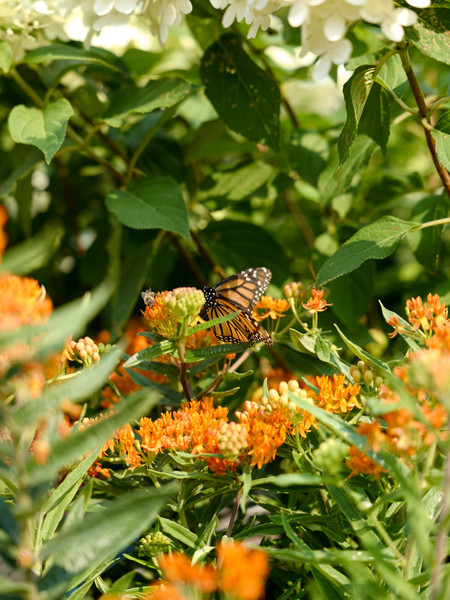
Asclepias tuberosa (Butterfly Weed)
An herbaceous perennial with fiery red, orange, and yellow flowers that are a favorite of pollinators. Ideal for pollinator gardens, meadows, and sunny borders.
Rudbeckia hira (Black-Eyed Susan)
An easy-care herbaceous perennial with bright gold, daisy-like flowers with black centers and dark green foliage. Very tolerant of heat and humidity. Wonderful in native wildflower gardens. Read more here.
Liatris (Blazing Star)
An herbaceous perennial with bright pink & purple flower spikes. Excellent all over the garden, from native gardens to borders. Great for cut flower arrangements and a pollinator favorite! Read more here.
Geum (Prairie Smoke)
An herbaceous perennial that is native to the northern U.S. and Canada. Pink star-shaped flowers create a gauzy effect when setting seed, that resembles smoke. Excellent for pollinators and works well in naturalized areas and even en masse as a groundcover. Read more here.
Plants for Part-Sun Rain Gardens
Lobelia cardinalis (Cardinal Flower)
An herbaceous perennial with tall, bright red flower spikes that bloom in late Summer. Needs constant moisture, which makes it an excellent choice for rain gardens and near ponds and streams. Attracts hummingbirds, butterflies, and other pollinators! Read more here. Lobelia siphilitica (Great Blue Lobelia) is another beautiful option with indigo-blue spikes rather than red.
Chelone (Turtlehead)
An herbaceous perennial with serrated, dark green foliage and spikes of white or pink, snapdragon-like flowers that appear in late Summer. Excellent for a pop of color in shady areas. Bees love it too! Read more here.
Sporabolus heterolepsis (Prairie Dropseed)
A fine-textured ornamental grass with light green blades that shift to a deep copper-gold in the Fall and airy light brown panicles. Care-free and attractive accent or groundcover. Attracts birds.
Eupatorium (Joe Pye Weed)
An herbaceous perennial with reddish green foliage and bright pink, dome-shaped flowers that bloom from late Summer to early Fall. Can reach up to 6’ tall! Excellent for meadows, native gardens, and stream banks. Read more here.
Polemonium (Jacob’s Ladder)
An herbaceous perennial with bright green & white variegated leaves and violet-blue flowers. Blooms in mid to late Spring. Great for shady beds and borders. Read more here.
Athyrium filix-femina (Lady Fern)
An herbaceous perennial with delicate light green foliage on vivid red-violet stems. More compact than other varieties of fern. Excellent as part of a shady woodland garden. Read more about perennial ferns here.
Adiantum pedantum (Maidenhair Fern)
A cold-hardy herbaceous perennial with delicate, fan-shaped green foliage on shiny black stems. Excellent as part of a shady woodland garden.
Ligularia (Leopard Plant/Ragwort)
An herbaceous perennial with mounds of heart-shaped, dark green foliage and yellow-orange, daisy-like flowers. Does well in beds and borders. Read more here.
Small Trees and Shrubs for Rain Gardens
Amelanchier (Serviceberry)
Birds love the plum-colored berries of Amelanchier . Known for four-season interest, serviceberry have white showy flowers in the Spring, juicy berries in the Summer, and brilliant orange & yellow Fall color. Read more here.
Cornus (Red or Yellow Dogwood)
A deciduous, compact shrub with lush green foliage and a neat, rounded shape. Bare red stems provide striking color in the Winter landscape. Excellent for mass planting, foundation planting, erosion control. Plant in full to part sun. Newer, more compact varieties of dogwood offer easy maintenance and structure to a rain garden.
Prunus virginiana (Chokecherry)
This tough, hardy, ornamental, deciduous tree bears masses of white flowers in the Spring. Later in the Summer, small dark purple cherries emerge. Fruits can be used to make jams and jellies. Gorgeous coppery bark shimmers in Winter light. This pollinator favorite also attracts songbirds who delight in a fruity snack.
Physocarpus (Ninebark)
A stunning, deciduous shrub native to North America. Ninebark generally grow 4-9' tall and wide depending on the variety, and provide incredible four-season interest in the garden.
Betula nigra (River Birch)
This easy, fast-growing tree prefers medium to wet soils. Drooping flowers (catkins) appear in the Spring followed by dark green, toothy leaves which turn yellow in the Fall. Known for its salmon-pink to reddish brown bark that peels to reveal an inner light-colored bark adds interest to bleak Winter landscapes.
Take Care!
When caring for your rain garden during the first year, make sure to water often and water well. Newly planted perennials need at least 1 inch of water per week, and we can’t always count on a precipitation event to give a good soaking. Rain gardens require little maintenance once they've established.
Not only are rain gardens effective as water collection and infiltration sites, but they also serve as habitat for pollinators and beneficial insects. Make sure to care for the plants in this or any garden with pollinators in mind.
For further resources about planning and planting your rain garden, check out Blue Thumb! They are a Twin Cities organization promoting native plants, raingardens, shoreline stabilization, and turf alternatives to reduce runoff and improve water quality. The University of Minnesota Extension's Website is also a great resource for plant lists and more!
If you would like assistance with picking plants for a rain garden, feel free to stop in and ask! Otherwise, email us at hello@tonkadale.com - we're here to help!