
May Perennial Planting Guide
Posted by Annie Algren on May 11th 2026
May Perennial Planting Guide
May is when the garden really starts to stir and come back to life. The soil has finally shaken off its chill, the days linger a little longer, and everything feels ready to grow with fresh energy. Early season perennials don’t waste any time — some are already showing off buds and blooms, while others are quietly building strong roots that will fuel years of beauty ahead.
This planting guide brings together dependable, hardy, early season perennials that thrive in our Minnesota climate, to help you create a layered tapestry of color, texture, and interest that evolves with the seasons.
Below, we’ll walk through the planting essentials, introduce the stars of the garden, and share a few simple tips to help everything settle in and flourish.
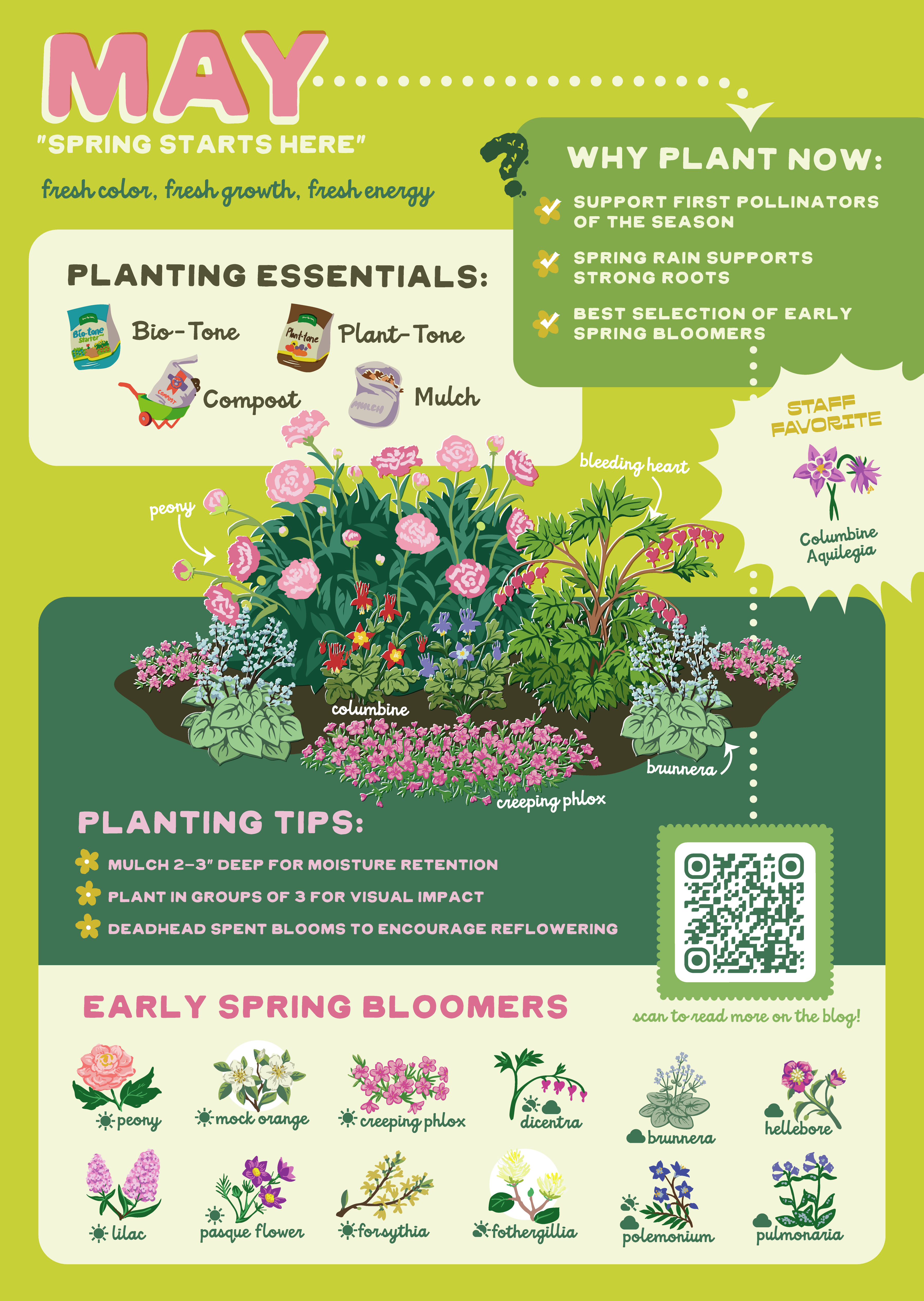
Planting Essentials
Healthy plants start with healthy soil. These four amendments create the foundation for strong root development, drought resilience, and long-term garden success.
Bio-Tone Starter Plus: An organic, starter fertilizer that contains beneficial microbes that support soil life - designed specifically for transplanting. Mix into soil at planting time to:
- encourage rapid root establishment
- reduce transplant stress
- help plants access nutrients more efficiently
Plant-Tone: An organic, slow-release fertilizer that feeds plants steadily over time. Apply when planting and again mid-season. It's a gentle, non-burning formula that's ideal for perennials, shrubs, and flowering plants. It benefits plants by:
- supporting balanced top growth and flowering
- improving soil fertility long-term
Purple Cow Compost: Improves both soil structure and plant health. Mix 20–30% compost into planting soil. This will help to:
- improve drainage in heavy soils
- aid sandy soils in retaining moisture
- increase microbial activity
- provide slow, natural nutrients to plants
Mulch: One of the most important finishing steps. Apply a layer that is 2–3 inches deep, keeping it slightly away from plant crowns. Think of the shape like a donut, not a volcano around your plants! Mulching will:
- help retain soil moisture
- regulate soil temperature
- reduce weeds
- improve soil as it breaks down
Spring Stars of the Garden
Peony (Paeonia)
Classic, fragrant Spring blooms; long-lived and deer resistant.
Full sun • 2–3 ft
Bleeding Heart (Dicentra)
Graceful and shade-loving, with heart-shaped flowers.
Part–full shade • 18–30 in
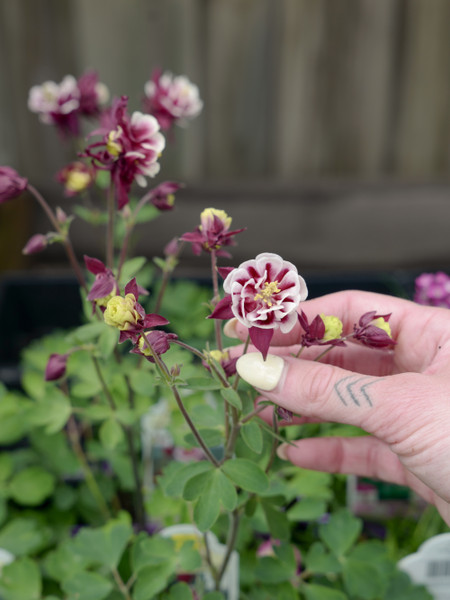
Columbine (Aquilegia)
Light, airy blooms that attract hummingbirds; self-sows lightly.
Sun–part shade • 18–24 in
Brunnera
Bold foliage and tiny blue flowers; brightens shady spots.
Part–full shade • 12–18 in
Creeping Phlox (Phlox subulata)
Low, colorful groundcover; great for borders and weed control.
Full sun • 4–6 in
Hellebore (Helleborus)
Very early blooms; evergreen and deer resistant.
Part–full shade • 12–18 in
Jacob’s Ladder (Polemonium)
Soft, fern-like texture; pollinator friendly.
Part shade • 12–18 in
Lungwort (Pulminaria)
Early blooms with spotted foliage; thrives in shade.
Shade–part shade • 10–14 in
Witch Alder (Fothergilla)
Compact native shrub with fragrance and warm Fall color.
Sun–part shade • 3–5 ft
Forsythia
Bright yellow early Spring bloomer; fast-growing backdrop.
Full sun • 6–8 ft
Lilac (Syringa)
Highly fragrant, long-lived Spring classic.
Full sun • 8–12 ft
Mock Orange (Philadelphus)
White blooms with a delicate citrus fragrance; cottage garden feel.
Sun–part sun • 6–8 ft
Pasque Flower (Pulsatilla)
Ultra-hardy early bloomer; great for rock gardens.
Full sun • 6–12 in
Planting Tips
Step 1: Dig a wide hole. Loosen soil 1.5–2x wider than the plant's container or root ball.
Step 2: Improve soil. Mix native soil with Bio-Tone and compost.
Step 3: Plant at the correct depth. The top of the root ball should be level with surrounding soil.
Step 4: Water thoroughly. Soak deeply after planting to eliminate air pockets.
Step 5: Mulch! Apply 2–3 inches of mulch around plant, avoiding the crown.
Step 6: Monitor moisture. Water consistently during the first growing season. Water deeply, less frequently - rather than watering lightly, more often.
Additionally:
- Plant in groups of three for visual impact
- Consider mature size when spacing
- Deadhead spent blooms to encourage additional flowering
- Expect most perennials to establish first year, flourish second year- sleep, creep, leap!
May is about setting the stage for a beautiful growing season ahead. With strong roots, supportive soil, and thoughtful plant combinations, your garden will continue to grow fuller and more vibrant each year!
If you would like assistance troubleshooting perennial planting, feel free to stop in and ask! Otherwise, email us at hello@tonkadale.com - we're here to help!