
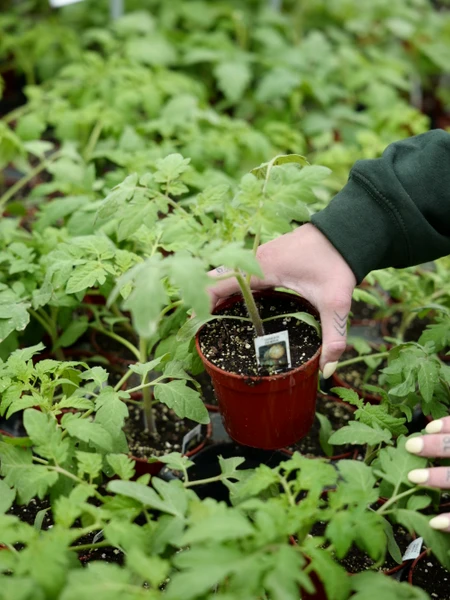
Tomatoes Deep Dive
Posted by Jessie Jacobson on May 5th 2026
Tomatoes Deep Dive
Did you know there are over 10,000 varieties of tomatoes? With all colors of the rainbow - purple, yellow, orange, red, and even green, you are sure to find one that suits your tastes. Choose your shape and choose your size - round, oval, pear shaped, cherry sized, golf ball sized, baseball sized, and so on! Eat them right of the vine, slice them for sandwiches and BLT’s, toss them in salads, cook them into sauces or squeeze them for juice. Pureed, dried, or pickled, tomatoes are delicious, versatile, and packed with health power!
Health Benefits
Tomatoes have vitamins C, A, B1 (Thiamin), B2 (Riboflavin), B3 (Niacin), B5 (Pantothenic Acid), B6 (Pyridoxine), B9 (Folate), K, and E, as well as many minerals essential for good health! Plus beta-carotene and the pigment lycopene, which are super antioxidants that help prevent cell damage by free radicals. These phytonutrients work in synergy with the vitamins and minerals in tomatoes to promote heart & bone health, and protect against inflammation and a number of different cancers.
Fun Facts
Eating cooked tomatoes may act as a kind of internal sunscreen, according to researchers at the Universities of Manchester and Newcastle, England, by helping block UV rays. But eating tomatoes is only a supplement to using sunscreens, not a replacement.
Botanically speaking, a tomatoes are a fruit. The government classified them as a vegetable in the late 1800s so that they could be taxed under custom regulations.
According to the USDA, Americans eat 22-24 pounds of tomatoes per person, per year. About half of that comes in the form of ketchup and tomato sauces.
China is the number one producer of tomatoes around the world, followed by India, Turkey, and then the U.S.
Tomatoes originated in South America, where they were called (xi)tomatl - an Aztec name meaning "plump thing with a navel."
The world’s most productive tomato plant was grown in the experimental greenhouse at Epcot in Walt Disney World. It produced over 32,000 tomatoes the first 16 months after it was planted.
Tomato Care Essentials
We grow many tomato varieties at Tonkadale – both tried and true and some more off the beaten path. You can read a little bit about each of the varieties we carry this season here. Regardless of which tomatoes you choose, there are some basic care principles to follow to ensure the best chance for happy, productive tomato plants.
1) Rotate the position of the vegetables in your garden each year to help ensure that soilborne diseases and pests don’t take hold and become an issue from season to season.
2) Plant tomatoes in a soil amended with manure or activated compost.
3) When you choose your tomato plants, for the tall and quirky ones. At planting time, pull away the bottom leaves and bury the stem. This ensures a great root system and a sturdy plant.
4) Amend with Tomato Tone to fertilize and add essential calcium to your plants.
5) Make sure to plan on staking your tomato. It’s easiest to place your tomato cage over your plants at the time of planting. If you’re using a tomato cage, put it over the plant right away when the plant is young.
6) As your tomatoes grow, prune away leaves that are near or touching the ground to precent soil borne disease. Pinch suckers (offshoots that sprout in the elbow between a branch and the main stem) as your plant develops to promote more fruit development.
7) Maintaining a regular watering schedule. Water deeply, about 1” per week and never water over the foliage. Wet leaves are the perfect environment for fungal diseases to develop. Fertilize ever two weeks with Tomato Tone and you are all set until harvest.
Being a proactive gardener is a great way to avoid common tomato disorders that can rear their ugly heads as the season wears on. Here are some signs of things to look for that would indicate a problem:
Disorders
Abiotic disorders distort plants and blemish fruits, but they are not caused by a living pathogen - usually a result of cultural practices or environmental conditions.
Physiologic leaf roll
- Leaf margins roll upward until they touch or overlap in a tube-like fashion.
- Usually result of hot dry weather or too much water, can also be caused by stresses to plant such as over-pruning or fast growth
- Does not usually affect continued plant growth or yield
Blossom-end rot
- Affected fruit have a tan to black flattened spot at the blossom end of the fruit
- Caused by a calcium deficiency in the tomato plant
- Do not over apply fertilizer containing Nitrogen as this adds to the problem
- Heavy rain or draught conditions can add to the problem
- Calcium and consistent moisture should help
Sunscald
- A pale yellow-white spot on the side of the fruit facing the sun, whose surface may dry out
- Caused by leaf loss or over pruning, exposing fruit to the sun
- Avoid sunscald by maintaining a healthy plant
Catface
- Malformation and scarring of fruit
- Causes are not known
- Large fruited varieties are more susceptible
Diseases
Early Blight
- Brown lesions first appear on older, lower leaves then spread up the plant
- Leaf tissue turns chlorotic (yellow), then necrotic (brown), then falls off
- Fungus lives in the soil and on weedy Solanaceous hosts
- Garden areas should be rotated and mulch applied to minimize disease
- Fungicide spray may be effective if applied preventatively
Late Blight
- Responsible for the Irish Potato Famine of the 1840s
- Leaves have large dark brown blotches with grey edge
- Spreads quickly - as it progresses there are large patches of dry brown foliage
- Fungicides may be effective
Anthracnose
- Small, depressed lesions that are circular in shape and sunken, often looking like bruising or molding on the fruit
- The pathogen overwinters on infected plant debris
- Staking and mulching helps
- Copper fungicides are effective when this a reoccurring problem
Bacterial Canker
- Results in leaf discoloration, wilt, fruit spots, stem cracking, and discoloration on tomato fruits
- Fruits have small, creamy-white spots with tan or brown centers
- Spreads by splashing water and dirty tools
- Infected plants should be disposed of. Do not plant vegetables in the Solanaceae family (tomatoes, eggplants, peppers, potatoes) in the same location for 3 years. Disinfect tools, cages, and toss wooden stakes.
Septoria Leaf Spot
- Sometimes mistaken for early blight, but can be treated similarly
- Attacks at any point in the season, but is the most common in humid weather or after heavy periods of rain
- Lower leaves show symptoms first. Round, yellow or water-soaked spots appear on the undersides of leaves. They quickly emerge on tops of leaves, and turn to black or brown with tiny black dots in the center. Fruit is rarely infected.
- Heavily infected leaves turn completely yellow, then brown, and then fall off
- Septoria leaf spot does not display characteristic “target” or concentric spots seen in early blight.
Powdery Mildew
- First evident as pale-yellow leaf spots, then white powdery spots can form on both upper and lower leaf surfaces.
- Powdery mildew infections are most common with humid conditions and temperatures around 68-81°F.
- Risky conditions include densely planted vines, plants crowded by weeds, plants in shaded sites, and over-fertilized plants.
- Apply a fungicide when a single spot of powdery mildew is first found or apply sulfur dust or spray to both the upper and lower surface of the leaves.
You can view images of each Tomato disorder and disease through the University of Minnesota Extension's website here.
Additional Prevention & Treatment Methods
- Remove and destroy infected leaves (be sure to wash your hands afterwards). Remove and destroy affected plants at the end of the season. Some diseases can survive in garden debris for up to three years.
- Once blight is present and progresses, it becomes more resistant to fungicide treatments. Treat as soon as possible and on a schedule as directed by the label.
- Rotate crops as diseases can overwinter in the soil and strike again the following season.
- Plant tomatoes in a raised bed to improve drainage and prevent diseases from spreading.
- Choose strong hybrid varieties to increase chances of plants remaining disease-free during the season.
- Give tomato plants extra space (more than 24 inches) to let air to move and keep leaves dry. Staking tomatoes also promotes better circulation.
- Water the soil, not the foliage to prevent water splashing which can spread soil-borne disease. Avoid overhead watering.
WOWZA that was a lot of information. But not to fret! With time, patience, and practice you will become the expert tomato grower you were meant to be. As always, send us your questions, bring in a leaf sample, or send us a photo of your tomato plants (hello@tonkadale.com). We are obsessed with your tomato growing success!