
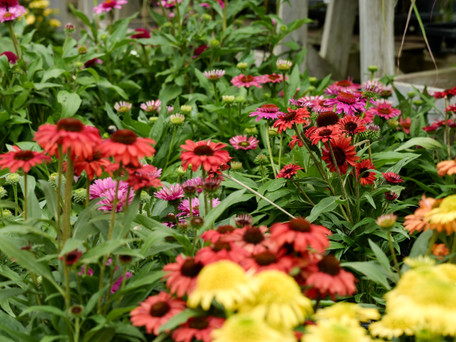
Success in the Garden All Summer Long
Posted by Sara Berg on Jul 19th 2026
Success in the Garden All Summer Long
In the heat of Summer, it's easy to lose track of all of the different aspects of keeping your garden flourishing. Cultivating a garden that thrives through the season requires a little extra love as Summer goes on - and the best days have yet to come! We compiled a list of seven areas to consider to keep your garden in perfect harmony.
Water, Water, Water!
Make sure to properly hydrate your newly planted perennials, trees, and shrubs all the way through Summer & Fall - even until our first hard frost. Long, deep watering - about 1" per week - is required to ensure Winter survival.
Likewise, it's important to water container gardens and hanging baskets almost daily as the temperatures rise. A long and thorough soak at the base of the plants is necessary to keep everything looking fresh.
Herb and veggie gardens, if planted in the ground also require 1" of water per week. Best practice is to avoid supplementing with overhead sprinklers, as water on the leaves can cause disease issues. A long soaking rain does count towards hydration, but make sure to check the status of your plants by observing their turgor (how sturdy or droopy your plant is), the weight of the container, and by how the soil actually feels. We all have our own moisture meter, literally right at our fingertips!
It’s tempting to set a schedule—Tuesdays and Fridays, right? But plants don’t really follow calendars. Overwatering and underwatering are both top culprits behind unhappy plants. Instead of sticking to a rigid schedule, check the soil moisture regularly. Stick your finger about an inch into the soil—if it's dry, it’s time to water!
Tip: Early morning watering is best, as it gives leaves time to dry and reduces the risk of disease.
Fertilize
While you water, you might as well fertilize too!
Annuals and Containers
We recommend a line-up of Miracle Gro options as an easy, water-soluble fertilizer. Use Mir-Acid for acid-loving plants such as petunias and calibrachoa. Use Bloom Booster to encourage off-the-chart blooms. Fertilize containers and hanging baskets in a sunny exposure at least once per week. Fertilize shade containers and hanging baskets every two weeks.
If you're a more of a hands-off gardener, use a slow-release fertilizer such as Osmocote. Apply 1-2 times per growing season by mixing granules into the top 1"-3" inches of soil. As you water, each granule will release nutrients over time.
Perennials, Trees, and Shrubs
Your go-to for fertilizing perennials, trees, and shrubs is Espoma’s Organic Plant-Tone. Apply to established perennials once in the Spring and once in the Fall.
Evergreens
Espoma’s Organic Evergreen Tone is great for all evergreen trees and shrubs which are often forgotten in a gardener’s fertilizing routine.
Vegetables and Herbs
Espoma’s Organic Garden Tone is an all-purpose, organic, slow-release fertilizer suitable for all vegetables and herbs. Mix into the soil at planting and then continue to apply monthly throughout the growing season. Herbs don’t feed as heavily, and will only require feeding at the time of planting and after a large harvest. Espoma’s Organic Tomato Tone is designed to feed tomato plants while providing calcium to promote flower and fruit production.
Pests, Diseases, and Viruses
Now is the time when some of our least favorite guests stop by the garden - hungry pests and troublesome pathogens & fungi. Keep a close eye on your plants for signs of distress, munching, and mildew. Check out the University of Minnesota Extension here to read quick tips on Preventing Plant Diseases in the Garden and Preventing Pests in Yard and Garden.
Click to read our blog "Summer Solutions for the Things that Bug You"
Click to read our blog "Garden Pests and Diseases"
Deadhead
Deadhead spent blooms, pinching back all the way to the stem - petunias, calibrachoas, geraniums, and begonias. Prune and pinch foliage of vining plants to encourage fullness and a shapely appearance - vinca vine, sweet potato vine, ivy. Pinch back taller plants such as coleus to keep their height in check and to create a fuller plant. Read our full-length blog on deadheading here!
Divide and Conquer
Cut-back and divide Spring and early-Summer blooming perennials after they finish blooming. Dividing plants reinvigorates overgrown perennials in the garden, and also makes more! Perennials to consider dividing mid-Summer include peonies, iris, daylilies, salvia, alliums, hostas, ferns, and many more. Check out Transplanting Perennials and How to Split Perennials for more information.
Plant for Continuous Color
Think about the progression of the season. Does your garden offer all-season color? Look at what’s blooming (or not blooming) right now, and think about adding mid & late Summer blooming perennials to your garden beds.
Keep bloom timing and bloom progression in mind when designing your space, incorporating early, mid, and late season bloomers in the garden to keep things colorful throughout the year! Check out our Planting for Mid-Season Color Guide to get started!
Tip: Mix native plants into your garden for low-maintenance beauty and better benefits for pollinators & your local ecosystem!
Reflect and Relax
Take plenty of time to enjoy your garden in all its glory! You'll be glad you did!
Gardening is all about learning, experimenting, and getting your hands dirty. Mistakes happen, and that’s okay - each misstep is an opportunity to grow (literally and figuratively).
If you would like additional advice on how to keep your garden successful all Summer long, feel free to stop in and ask! Otherwise, email us at hello@tonkadale.com - we're here to help!