
Goldenrod Goodness
Posted by Sara Berg on Aug 16th 2026
Goldenrod Goodness
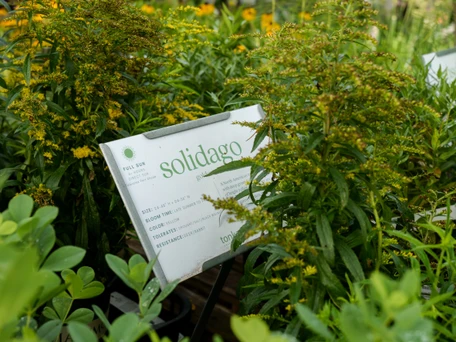
Goldenrod is a highly misunderstood, Autumn treasure. Often unfairly blamed for seasonal allergies, it instead serves as a bright swath of color through the Fall that pollinators adore. Far from a common weed, this resilient perennial blankets landscapes in a spectacular display of rich yellow blooms.
Goldenrod is widely considered a keystone plant in North America because of its vital impact on local biodiversity. Goldenrod hosts over one hundred species of caterpillars, supports dozens of specialist bees, and even hosts the monophagous goldenrod gall fly. These hosted critters provide a food source for birds during the growing season, while Goldenrod blooms provide a rare food source for pollinators late into the growing season. In Winter months, their seeds provide food for birds & other foragers.
Care
Light: Full to Part-Sun (4-6+ hours)
Attributes: An herbaceous perennial with tiny, bright yellow flowers clustered atop reddish-green stems.
Growth Habit: Upright, clumping
Soil Type: Loam, Clay, Sand, Rocky
Bloom Color: Yellow
Size: 2-5 feet tall, 2-3ft wide
Bloom Time: Mid-Summer to frost
Use: Native & pollinator plantings, stabilizing slopes & shorelines, fresh cut flower gardens
Maintenance: Cut back to the ground in Winter or Spring when the plant is dormant. Staking may be needed if plants are flopping over. Underplanting with shorter species of forbs can help provide structural support.
Benefits: Low-maintenance once established, deer-resistant, adaptable, drought-tolerant, late-season and Winter interest.
*Growth habits will vary slightly by species - this information is specifically for the Minnesota Native variety, Showy Goldenrod (Solidago speciosa).
Goldenrod vs. Ragweed
Goldenrod often gets a bad rap as a pollen-laden, late-season bloomer. However, goldenrod is not the culprit for your hay fever - ragweed is.
Goldenrod has sunny-yellow flower cluster-coated stems that appear to almost be dripping in pollen. It's no wonder that it ends up with the blame when it just looks like it would make you sneeze - but it's really not the guilty party! Goldenrod's pollen is quite heavy and sticky, and relies on pollinators to transfer it around.
Ragweed looks a bit more unsuspecting, with tall and spiky green blooms. However, its pollen is tiny and easily windblown, and one plant can produce up to a billion grains. A few varieties of Ragweed are native to Minnesota, but some counties also consider species to be noxious weeds due to their agressive spreading nature.
Ragweed on left, Goldenrod on Right - photo via Cornell University
Perfect Pairs
If you’re looking for some easy, quick plant pairing, here are a few more late-Summer bloomers to pair with your Goldenrod:
Liatris pycnostachya (Prairie Blazing Star): Full-sun lover, grows 36-60" tall. Purple, spike-like clusters of feathery blooms.
Andropogon gerardii (Big Bluestem Grass): Full-sun lover, grows 24-72" tall. Pink to Purple florets in the Fall. Beautiful blue-hued stems fade to copper in the Fall.
Lobelia cardinalis (Cardinal Flower): Full sun to part sun, grows 12-48" tall. Scarlet-red, 5-parted lipped flowers.
Bonus: these beauties are all native to Minnesota!
If you would like assistance picking out or caring for goldenrod, feel free to stop in and ask! Otherwise, email us at hello@tonkadale.com - we're here to help!