
Critter-Resistant Perennials: How to Repel Deer and Rabbits in Your Garden
Posted by Sara Berg on Sep 20th 2026
Critter-Resistant Perennials
There is never a shortage of big, bad garden varmints such as deer, rabbits, and other nuisance (albeit cute and fuzzy) creatures whose sole ambition (so it seems) is to find your favorite plants and chomp them to bits. What’s a gardener to do?
Luckily, just like us, deer and rabbits have their favorite foods. One way to deter them from damaging your valuable plants is to plant things they don’t generally like to eat. A word about “resistant” plants, however – garden pests will eat anything if they get a mind to or if they’re hungry enough!
In general, deer and rabbits often do not like to eat things that are fuzzy or textured, or that have a strong flavor. That does not mean they won’t eat nicely scented blossoms, though, as anyone who has lost all the flowers on their rose bushes to greedy deer can attest.
The best way to get a handle on our furry friends in the garden is to accept that they here to stay, embrace their cuteness, then control the things we can. Take action before deer and rabbits settle in and make your yard and gardens part of their lunch rotation.
Identifying the Culprit
If you see the culprit eating your plants, then identification is easy. If you do not see them, which is often the case, it’s still possible to identify who is responsible. Identification allows you to determine how to handle the situation while you live in harmony with all your fuzzy neighbors.
Rabbits
If rabbits have visited the garden, you’ll know it. Their sharp teeth leave a clean, angled cut on the stem. Rabbits love tender, new growth, so protecting new shoots until they are at a less-appetizing stage can be helpful.
Deer
Deer teeth tear plants rather than cut them, so the damaged plant will have roughly munched spots rather than clean-cut edges.
How to Prevent Munching
Use repellents - Actually use them!
There are plenty of scents deer and rabbits dislike, and repellents use these scents to mask the delectable smells of plants that they are drawn to. Repellents are just stinky stuff that are not harmful or toxic to you or the environment. Repellents are sold in granular or liquid form, and are easy to apply.
Apply repellents early and often to train critters to stay away. Applying to your prize-winners at first glimpse of life in the spring, and freshly-planted perennials before they can even think about it is key!
Heavy rains will wash away some repellents - be sure to reapply after downpours. Follow the reapplication directions on your bottle for best results.
If you're having the same troubles year after year, it might be time to switch up which type of repellent you are applying. Critters can get used to the scent in a matter of weeks - so changing the type/formula (active ingredients) or method of application (granules vs spray) is an important step in your prevention routine!
Shop repellents here or view our full selection in-store!
Physical Barriers
For rabbits, little fences work well. They can hop, but not very high. They can squeeze through tiny holes and crevices, so make sure the grid of the fence is tightly-woven. Unfortunately, deer require very high fences, (at least 8 feet) because they can jump very high. If lieu of a large fence, deer must believe they don’t want to enter an area. Electric fences work because, once zapped, deer remember the sensation and believe they cannot cross that barrier by jumping.
Another option is to tightly-string fishing line between rebar stakes at 1-2 feet increments around the area you’d like them to avoid. Deer are skittish and feed mostly early in the morning or at dusk, which means it will be harder for them to see the fishing line. Bumping into it will make them feel uneasy about something they can’t see touching them as they try to enter the area.
Plant Varieties that are Deer and Rabbit-Resistant
Remenber that animal-resistant does not always mean animal-proof. The trick is to get one step ahead of the furry marauders by gardening with plants that are not their favorite. Do that, and they might just cruise over to someone else’s yard.
Annuals that deer and rabbit are not as fond of include:
- Alyssum - peppery taste and strong scent
- Marigolds - strong scent
- Lantana - peppery scent and scratchy leaves
- Ageratum - fuzzy flowers and bitter taste
- Dusty Miller - fuzzy foliage
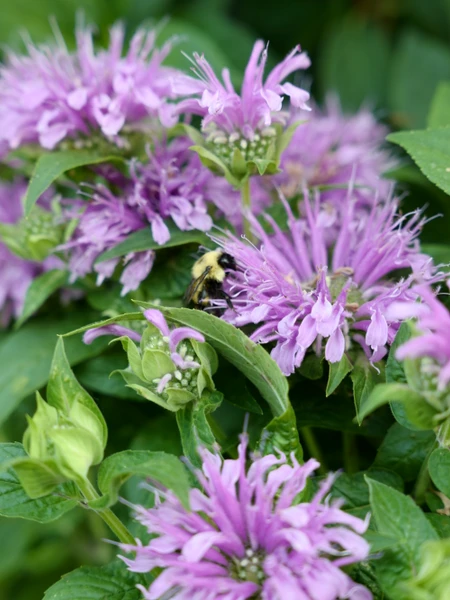
- Herbs (rosemary, lavender, mint, bergamot, sage) - textured leaves, strong scent, bitter taste
Check out our full list of perennial and shrub recommendations below.
If you would like assistance in your defense against critters, feel free to stop in and ask! Otherwise, email us at hello@tonkadale.com - we're here to help!